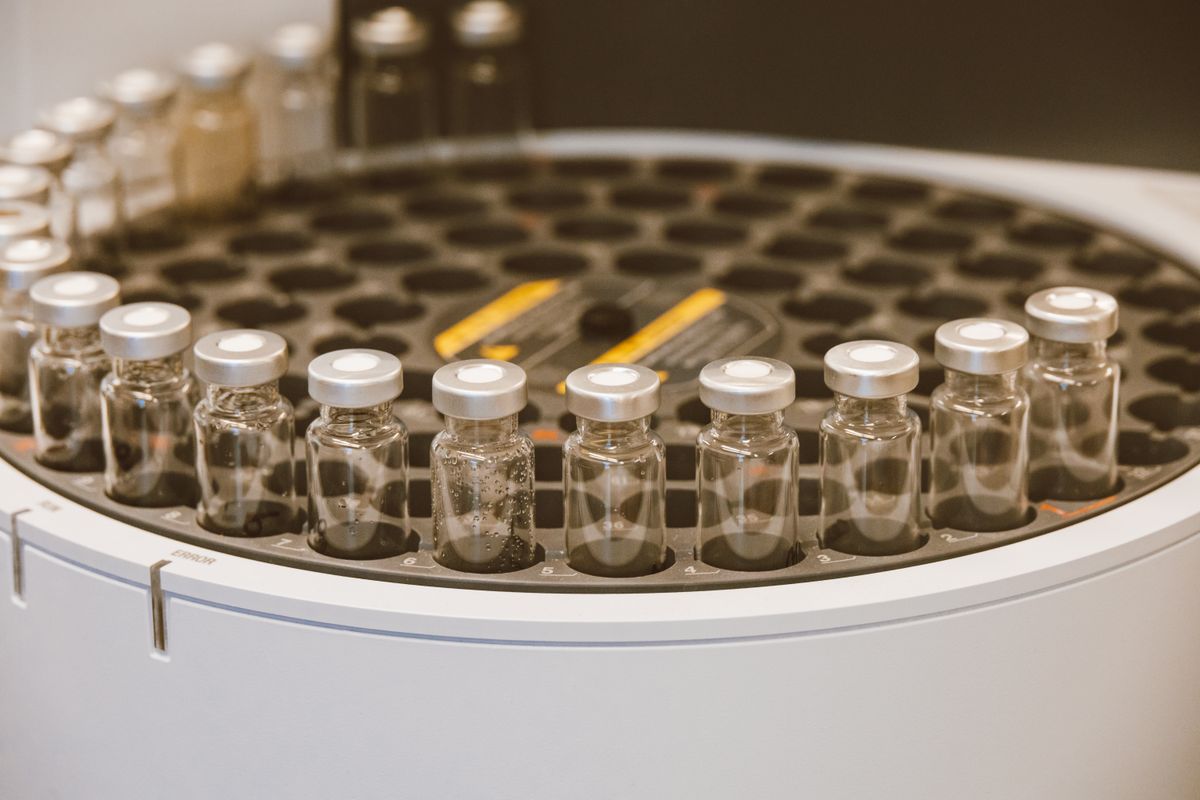
The phrase sits on almost every research peptide vial: Research Use Only, usually shortened to RUO. It looks like a quality mark. It is not one.
RUO is a legal classification. It governs how a product may be sold and to whom. It says nothing about what is in the vial.
No test is run to earn the label. No inspector checks anything. It is a statement about intended use, written by the seller, printed by the seller.
What the label does and does not say
- It does say: this material is not being sold for use in people. The manufacturing rules that cover human medicines therefore do not apply.
- It does not say: the contents are sterile.
- It does not say: endotoxin levels are low.
- It does not say: heavy metals are absent.
- It does not say: the purity or the identity has been verified by anyone.
Everything on the second list has to be measured. The label measures nothing.
What it means in law
The detail below is United States law. Other countries have their own equivalents, and they do not all draw the line in the same place.
- It sits outside drug manufacturing rules. Medicines for people are made under rules called current good manufacturing practice, set out in 21 CFR Part 211. Material not sold for human use falls outside them. Those rules are what force controls on cleanliness, batch records, and testing in a medicine factory. None of them are required here.
- It cannot be marketed for human use. Say a seller promotes the material for treating or improving something in a person. In the regulator's eyes it is no longer a research chemical. It is an unapproved drug.
- It moves responsibility to the buyer. The wording states that the seller is not supplying the material for use in people. What happens next is the buyer's decision.
That third point has a limit worth knowing. The label follows the intended use; it does not create it. Regulators read the whole picture. That includes how a product is advertised, and what the seller knew about how it was being used. Where the marketing contradicts the label, the words on the vial have repeatedly failed to protect the seller. The label is a statement of intent, not a shield.
The analytical pitfall
This is where the misreading gets expensive. An RUO label offers no evidence about endotoxin, sterility, or heavy metals. None of those appear on a purity chart either, because the light used in an HPLC run cannot see them.
So the label proves nothing, and the most quoted test does not cover it. Each of those properties needs its own validated test, on the batch in front of you, whatever the vial says.
Treat RUO as a statement about who the material may be sold to. Then go and read the certificate of analysis, which is where the actual evidence lives.
Scope note
This article explains published research and the rules around it. It carries no dose,
no protocol, and no claim that any compound treats, cures or prevents a condition in
anyone. Where the evidence is thin we say so. See our
editorial standards.
References
- US Food and Drug Administration. 21 CFR Part 211, Current Good Manufacturing Practice for Finished Pharmaceuticals.
- US Food and Drug Administration. 21 CFR 809.10(c), Labeling for in vitro diagnostic products — the origin of the "Research Use Only" wording.
- US Food and Drug Administration. Distribution of In Vitro Diagnostic Products Labeled for Research Use Only or Investigational Use Only, guidance for industry and FDA staff (2013).
- US Food and Drug Administration. 21 CFR 201.128, Meaning of "intended uses".