The most repeated line about Semax is that it is not a stimulant. That is true, and it is more interesting than it sounds — because the mechanism underneath it is not "does nothing exciting." It is closer to the opposite.
Semax appears to amplify what other things do to your dopamine system rather than raising dopamine itself. That single property explains the appeal, the user reports, and the one interaction that genuinely matters.
An amplifier, not a source
Work from the Institute of Molecular Genetics found that giving Semax twenty minutes before amphetamine produced far greater dopamine release than amphetamine alone. Eremin's 2005 paper in Neurochemical Research found the same shape. It activates dopamine and serotonin systems, but by boosting release rather than driving it.
Think of it as turning up the gain rather than turning up the signal.
Three things follow, and they are usually reported separately without anyone joining them up.
Why "caffeine works better" is such a common report. It is not a placebo observation. It is the mechanism doing exactly what it does.
Why people describe interest without jitteriness. Nothing is being pushed; the response to what is already there is being widened.
Why the stimulant warning is real. An amplifier amplifies whatever you feed it. Stacking this with strong stimulants is not additive in the way "two mild things" implies, and MAO inhibitors are a hard contraindication for the same reason.
That last point deserves more weight than it usually gets. A compound described everywhere as gentle carries a specific, mechanism-driven interaction risk.
Where it comes from, and the cortisol question
Semax is seven amino acids: the ACTH fragment at positions 4 to 7, with Pro-Gly-Pro attached to the tail. That addition is what makes it stable enough to survive and reach the brain, and it is why the compound is usually described as an ACTH(4-10) analogue.
ACTH is the pituitary hormone that tells your adrenal glands to release cortisol. So the obvious question is whether this raises cortisol.
It does not. The part of the hormone that signals the adrenal cortex is not the part that was kept. What remains is the neurotrophic fragment. That is a clean answer to a fair worry, and worth stating outright rather than letting people assume the family resemblance carries over.
The same design idea appears in Selank, from the same institute — a natural fragment plus Pro-Gly-Pro for stability. These two are siblings.
The BDNF numbers, at their actual size
BDNF is the headline mechanism everywhere Semax is discussed, usually in language suggesting something dramatic. The measured figures are more modest, and worth seeing plainly.
In rat hippocampus, Dolotov's group found a single intranasal dose produced:
- BDNF protein up around 1.4-fold
- TrkB receptor activation up around 1.6-fold
- BDNF gene expression up around threefold
Onset around 20 minutes, peak near 90, lasting roughly 20 to 24 hours.
Those are real effects, and they are not enormous. A 1.4-fold rise in a growth factor nudges a system rather than transforming it. And it is in rats. Set expectations from the numbers rather than from the fertiliser metaphor.
The genome-wide work is broader. Medvedeva's 2014 analysis in BMC Genomics found over 1,500 genes shifted in rat stroke models, with immune and vascular genes up and inflammatory genes down. The authors' conclusion is the useful part. They read immune modulation and vascular support as the main routes to neuroprotection, not new neurons alone.
The evidence, and where all of it comes from
Semax has been a prescription medicine in Russia for three decades. In 2011 it joined the national list of drugs classed as vital and essential. Doctors there use it for stroke, brain injury, cognitive decline and optic nerve disease.
Every published human study comes from Russia. There are no Western clinical trials.
That is the same gap Selank has, from the same institute, and it is worth noting that two separate compounds sharing one evidence base do not corroborate each other. They share the limitation.
Stroke, 110 patients (Gusev, 2018). Ten days of treatment, a twenty-day break, then a second course. Plasma BDNF rose and stayed up across the study. Motor performance improved, and so did functional independence on the Barthel index. That is a standard, externally validated stroke measure, not one built for the study. This is the strongest result on the page. An earlier 2001 study in 30 acute-phase patients found faster return of neurological function.
Cognition, healthy men under fatigue (2007). Single dose. Memory test accuracy 71% against 41% in controls, holding for 24 hours.
That gap is large. Large enough that it is worth saying what would settle it: a replication somewhere else, by someone else. One study, one country, one small group of healthy men is where this sits today.
Optic nerve conditions. Russian clinical data reports 70–80% therapeutic efficacy with improvements in acuity, visual field and colour vision. Impressive numbers. But "therapeutic efficacy" with no comparator stated is a softer claim than it looks.
The dose gap nobody mentions
Here is a discrepancy worth pointing at, because it sits between the evidence and the practice.
The stroke trial that produced the best human result used 6,000 mcg per day. The cognitive study used 1,000 mcg in a single dose.
Protocols circulating for general cognitive use run at a fraction of that — commonly a tenth to a twentieth of the stroke dose.
There may be perfectly good reasons for that. Stroke recovery is not the same target as everyday focus, and the clinical dose was used under supervision for short courses. But the human efficacy data sits at one end of the range and typical use sits at the other. Anyone reasoning from "it worked in the trials" should know the trials were not testing what they are doing.
The finding that cuts against the mood claims
Semax is widely described as calming, and animal work does show anxiolytic effects.
But a 1996 study found an anxiogenic component at certain doses — it increased anxiety. And user reports split the same way, with the higher-potency modified version implicated more often.
So the anxiety effect runs both ways, and it depends on dose. That matters here, because this compound is most often stacked with Selank, whose whole purpose is calming anxiety. If you are taking one thing for anxiety and one thing that can worsen anxiety at the wrong dose, that interaction is worth understanding before you combine them, not after.
What the imaging shows
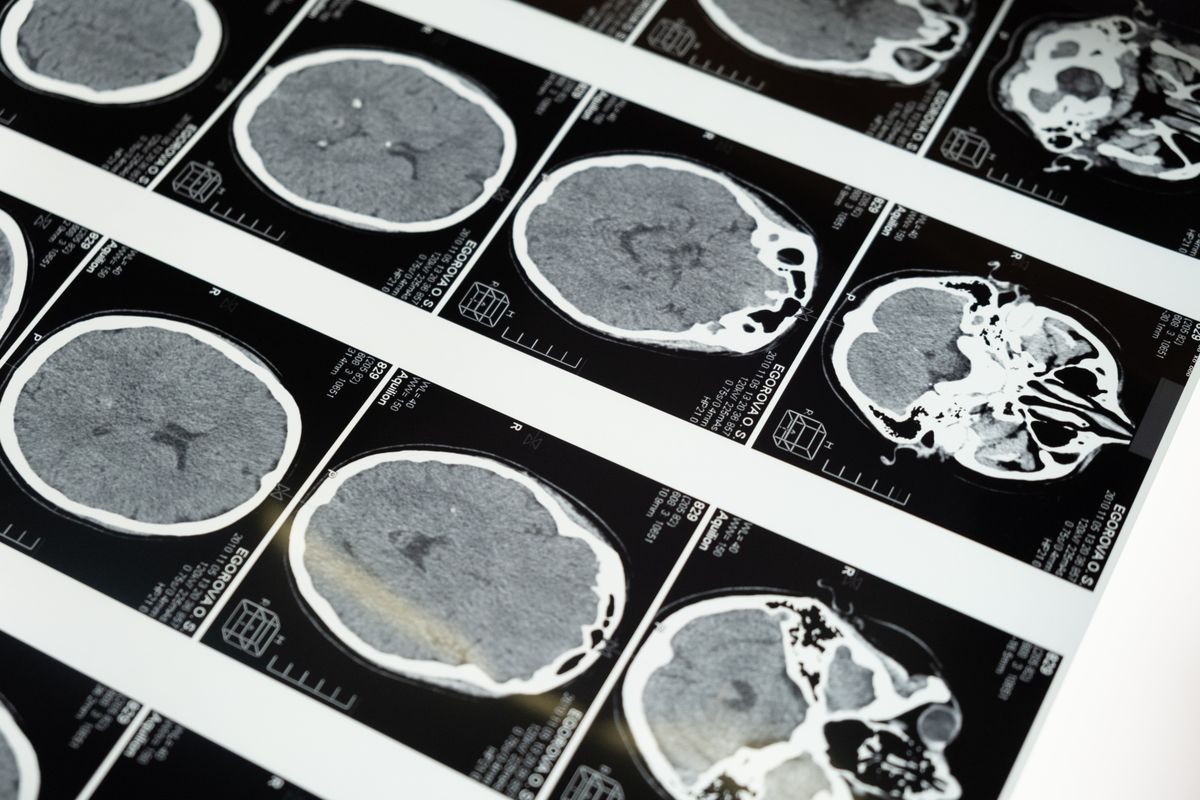
Resting-state fMRI found that within minutes of a dose, the default mode network became both more active and more strongly connected. That network is associated with creativity, visualisation and problem-solving.
An objective measure in humans, and it lines up with the subjective reports of easier verbal fluency and creative thinking. Hold it lightly. Connectivity changing is not the same as thinking improving, and the imaging study watched the brain rather than measuring performance.
Modified versions have no trials of their own
N-Acetyl Semax Amidate caps both ends of the peptide to resist enzymatic breakdown. Users describe it as more potent, which is also where more of the anxiety reports cluster.
No clinical study has tested it. Every published trial used the original sequence. The change is meant to affect durability, not action. But "meant to" is not "shown to." And if a variant really is stronger, a dose reasoned from the original compound's data is no longer the dose that data supports.
Side effects, and one claim handled well
After three decades of Russian clinical use the reported profile is clean. No hormonal disruption, no dependency, no withdrawal. And no major adverse events in the 110-patient stroke study, at the full clinical dose.
Common complaints are nasal irritation and dryness, temporary discolouration inside the nose, mild headache, and restlessness or poor sleep if dosed late. Less often: irritability, raised anxiety at higher doses, blood glucose elevation in diabetics, and blood pressure rises at higher doses.
The hair shedding question is worth flagging because the source handles it the way it should be handled. Clinical studies have not documented hair loss. Some users report shedding. The proposed link runs from BDNF to hair follicle cycling and is theoretical. That is the honest position — an unexplained user report, not a known effect, and not a dismissal either.
Who should not use it
MAO inhibitors are the firm one, for the dopamine-potentiation reason above. Also uncontrolled high blood pressure, given the readings reported at higher doses. Also pregnancy and breastfeeding. And psychiatric conditions, particularly mania or severe anxiety disorders, since an amplifier is the wrong tool for a system already running hot.
Care with existing anxiety, with diabetes, and with any other stimulant or nootropic, since the amplification is not selective about what it amplifies.
One footnote, as with Selank: it is not currently on the FDA's Category 2 list, which distinguishes both of these from most compounds covered on this site.
Scope note
This article explains published research and the rules around it. It carries no dose,
no protocol, and no claim that any compound treats, cures or prevents a condition in
anyone. Where the evidence is thin we say so. See our
editorial standards.
References
- Gusev, E. I., Martynov, M. Y., Kostenko, E. V. et al. The efficacy of semax in the treatment of patients at different stages of ischemic stroke. Zhurnal Nevrologii i Psikhiatrii imeni S.S. Korsakova 118, 61–68 (2018).
- Dolotov, O. V., Karpenko, E. A., Inozemtseva, L. S. et al. Semax, an analog of ACTH(4-10) with cognitive effects, regulates BDNF and trkB expression in the rat hippocampus. Brain Research 1117, 54–60 (2006).
- Medvedeva, E. V., Dmitrieva, V. G., Povarova, O. V. et al. The peptide semax affects the expression of genes related to the immune and vascular systems in rat brain focal ischemia: genome-wide transcriptional analysis. BMC Genomics 15, 228 (2014).
- Eremin, K. O., Kudrin, V. S., Saransaari, P. et al. Semax, an ACTH(4-10) analogue with nootropic properties, activates dopaminergic and serotoninergic brain systems in rodents. Neurochemical Research 30, 1493–1500 (2005).
- Ashmarin, I. P., Nezavibatko, V. N., Myasoedov, N. F. et al. A nootropic adrenocorticotropin analog 4-10-semax: 15 years experience in its design and study. Zhurnal Vysshei Nervnoi Deyatelnosti 47, 420–430 (1997).
- Stavchansky, V. V., Yuzhakov, V. V., Botsina, A. Y. et al. The effect of Semax and its C-end peptide PGP on the morphology and proliferative activity of rat brain cells during experimental ischemia: a pilot study. Journal of Molecular Neuroscience 45, 177–185 (2011).
- Glazova, N. Y., Merchieva, S. A., Sebentsova, E. A. et al. Semax and Pro-Gly-Pro activate the transcription of neurotrophins and their receptor genes after cerebral ischemia. Cellular and Molecular Neurobiology 29, 871–878 (2009).
- Panikratova, Y. R. et al. Functional connectomic approach to studying Selank and Semax effects. Doklady Biological Sciences 490, 9–11 (2020).
Where to buy
Nalu Labs
Research-grade material, sold for laboratory research use. We link to a single supplier rather than a list, so you know exactly where the
recommendation goes. Check the certificate of analysis against
what a COA can and cannot show
before you buy anything.
Shop at Nalu Labs →
Commercial link. Nothing on this page is a dose, a protocol, or a
claim that this compound treats or prevents any condition.