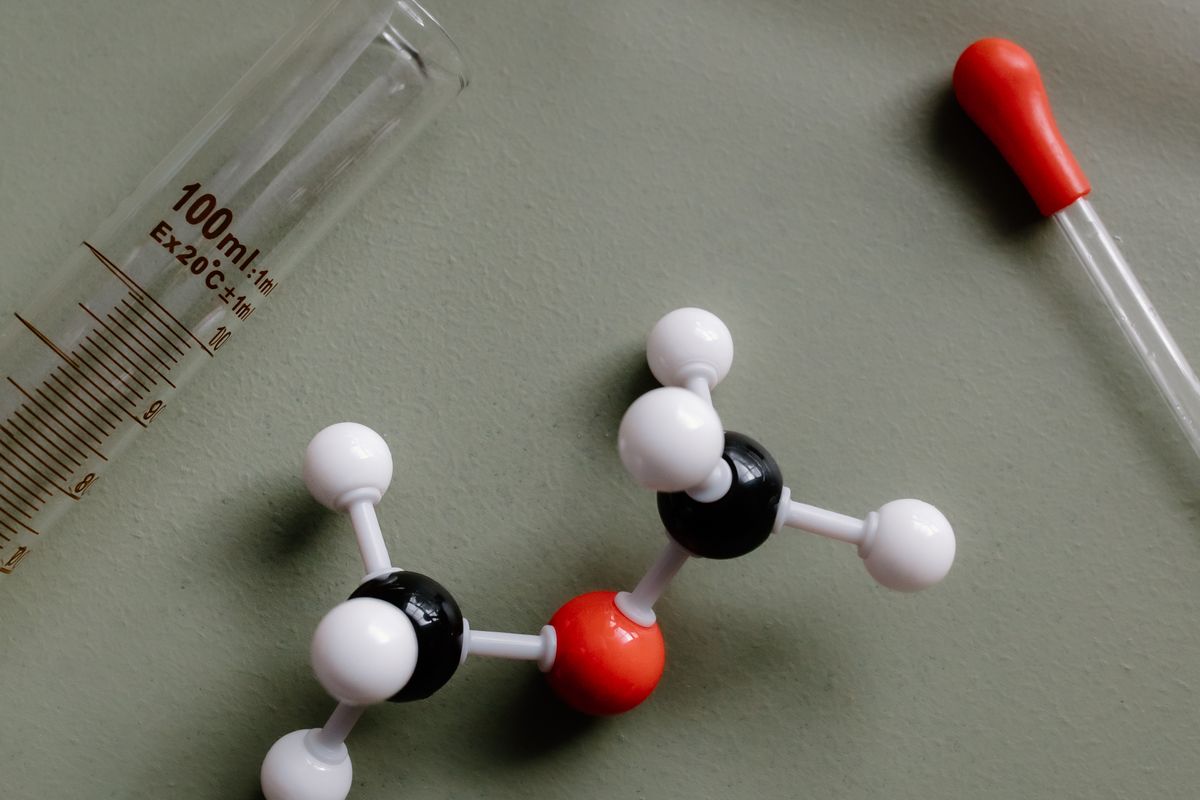
5-Amino-1MQ is the odd one out in this section. It is not a peptide. It is a small molecule, and that difference is not academic. Small molecules survive digestion, so this one can be swallowed rather than injected.
It works by blocking an enzyme called NNMT. Understanding why that might matter takes a short detour through how cells keep themselves supplied with NAD+.
NAD+, and the pathway that supplies it
NAD+ is a shuttle. It collects electrons from the food you have eaten and carries them into the electron transport chain. Their passage there drives the production of ATP. Hand the electrons off and NAD+ becomes NADH. Pass those on in turn and it reverts to NAD+, ready to go again. This runs thousands of times a day in every cell.
Around 80% of your NAD+ is made through the salvage pathway. That pathway recycles nicotinamide, a form of vitamin B3, back into NAD+.
Where NNMT fits
NNMT is a clearance enzyme. It takes nicotinamide, adds a methyl group, and makes 1-methylnicotinamide, which is then excreted. That is normal housekeeping, not a fault.
But it means two pathways are drawing on the same pool. One turns nicotinamide into NAD+. The other turns it into waste.
Under ordinary conditions this is not a contest. NAMPT, the enzyme that makes NAD+ from nicotinamide, binds it several hundred times more tightly than NNMT does. Nicotinamide flows toward NAD+ by default. The liver has other routes besides.
Fat tissue is the exception. This is the whole argument for the compound. Fat cells depend on the salvage pathway, and NNMT is their only route for clearing nicotinamide. There is no backup.
The cycle that feeds itself
In obesity, NNMT is overexpressed in fat tissue. That drains the single pathway those cells have for making NAD+. Less NAD+ means poorer fat burning. Poorer fat burning favours storage. More storage means more fat tissue, and more NNMT.
Blocking the enzyme is an attempt to interrupt that loop. In cells, blocking it raises NAD+. It also raises SAM, another molecule NNMT consumes. SIRT1 is activated, and the creation of new fat falls.
The distinctive part is what does not happen. In the mouse work, food intake did not change. Whatever fat was lost came from burning more energy, not from eating less. That is the opposite end of the problem from the GLP-1 drugs.
What the animal work found
Kraus and colleagues (Nature, 2014) laid the foundation. NNMT is among the most strongly regulated genes in white fat tissue in metabolic disease models. Knocking it down in mice protected against diet-induced obesity and improved insulin resistance. This is also the work showing NNMT overexpression tracks body fat rather than age.
Neelakantan and colleagues (Biochemical Pharmacology, 2018) tested 5-Amino-1MQ itself. In diet-induced obese mice: roughly 35% less white adipose mass, about 30% smaller fat cells, lower plasma cholesterol, no change in food intake, no observed adverse effects.
Neelakantan and colleagues (2019) looked at aged muscle, finding the compound activated dormant muscle stem cells and improved regenerative capacity, with peak torque up about 70% against controls.
Dimet-Wiley and colleagues (Scientific Reports, 2022) paired the compound with a switch from high-fat to low-fat diet. Body weight and fat mass came back to levels you could not tell apart from mice that had never been obese. The diet switch alone did not manage that.
Awosemo and colleagues (2021) established the pharmacokinetics: about 38% oral bioavailability in rats, terminal half-life close to seven hours.
There are no human trials. Not one. Everything above is mice and cells.
Who the mechanism points to
This deserves stating plainly, because it cuts against how the compound is usually sold.
The impressive results came from diet-induced obese mice, animals whose NNMT was already overexpressed. Blocking the enzyme corrected something that was already wrong.
In a lean, metabolically healthy person, fat-tissue NNMT sits at baseline. There is no drain to plug. On this mechanism there is nothing to correct, and no reason to expect much.
Why the microdose protocols do not add up
This is worth working through, because microdosing is widely marketed and the arithmetic does not support it.
To block an enzyme meaningfully, you need enough of the compound present to shut down a good share of it. The usual benchmark is half, known as the IC50 threshold. Below that, not much happens.
The allometric translation from the mouse study puts the human-equivalent dose at roughly 400 mg per day. Protocols sold as microdoses commonly run 150 to 600 micrograms per day. That is roughly three orders of magnitude below the figure the animal work implies.
There is a second problem. NAMPT already binds nicotinamide far more tightly than NNMT, so nicotinamide goes to NAD+ anyway. NNMT only becomes a real drain when heavily overexpressed. So a dose far below inhibitory concentration, aimed at an enzyme that was never the main competitor, has two separate reasons to do nothing.
It is worth asking why such protocols exist. The economics answer it. A 10 mg vial lasts about two months at 150 micrograms a day. At the dose the animal data implies, it lasts about two days. The effective dose is commercially awkward. The ineffective one is not.
What is not known
The gaps here are larger than the findings.
No human efficacy or safety data exists at any dose. Human protocols in circulation are extrapolations from allometric scaling and pharmacokinetic modelling, not dose-finding studies.
And NNMT does more than manage vitamin B3. It has roles in cellular detoxification and in cancer biology, where its behaviour varies by tumour type. What sustained inhibition does in a person over months has not been studied. Blocking an enzyme with several jobs is not the same as blocking one with a single job.
Scope note
This article explains published research and the rules around it. It carries no dose,
no protocol, and no claim that any compound treats, cures or prevents a condition in
anyone. Where the evidence is thin we say so. See our
editorial standards.
References
- Kraus, D. et al. Nicotinamide N-methyltransferase knockdown protects against diet-induced obesity. Nature 508, 258–262 (2014).
- Neelakantan, H. et al. Selective and membrane-permeable small molecule inhibitors of nicotinamide N-methyltransferase reverse high fat diet-induced obesity in mice. Biochemical Pharmacology 147, 141–152 (2018).
- Neelakantan, H. et al. Small molecule nicotinamide N-methyltransferase inhibitor activates senescent muscle stem cells and improves regenerative capacity of aged skeletal muscle. Biochemical Pharmacology 163, 481–492 (2019).
- Dimet-Wiley, A. et al. Reduced calorie diet combined with NNMT inhibition establishes a distinct microbiome in DIO mice. Scientific Reports 12, 484 (2022).
- Babula, J. J. et al. Nicotinamide N-methyltransferase inhibition mitigates obesity-related metabolic dysfunction. Diabetes, Obesity and Metabolism 26, 5272–5282 (2024).
- Awosemo, O. et al. Development and validation of LC-MS/MS assay for 5-amino-1-methyl quinolinium in rat plasma: application to pharmacokinetic and oral bioavailability studies. Journal of Pharmaceutical and Biomedical Analysis 204, 114255 (2021).
- Pissios, P. Nicotinamide N-methyltransferase: more than a vitamin B3 clearance enzyme. Trends in Endocrinology and Metabolism 28, 340–353 (2017).
Where to buy
Nalu Labs
Research-grade material, sold for laboratory research use. We link to a single supplier rather than a list, so you know exactly where the
recommendation goes. Check the certificate of analysis against
what a COA can and cannot show
before you buy anything.
Shop at Nalu Labs →
Commercial link. Nothing on this page is a dose, a protocol, or a
claim that this compound treats or prevents any condition.